
Ulanqab-Bahawalpur Comparison Highlights Opportunities for Pakistan in AI and Digital Technology

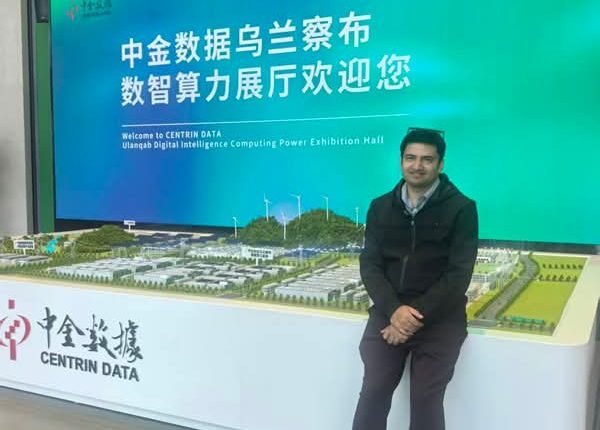
ISLAMABAD, Oct. 11: A comparison between Ulanqab in China’s Inner Mongolia Autonomous Region and Bahawalpur in southern Pakistan is opening new avenues for exploring cooperation in artificial intelligence, digital infrastructure, higher education and renewable energy.
Despite differences in their economic structures and development levels, the two regions share certain geographical characteristics, including dry weather, vast open spaces and sandy terrain. Their contrasting development experiences offer insights into how local resources can be linked with technology, research and economic growth.
According to China Economic Net (CEN), Ulanqab has emerged as a growing centre for computing infrastructure by capitalising on its energy resources, cool climate and strategic location. The city is part of China’s national “East Data, West Computing” strategy, which directs computing resources towards western regions suited to large-scale data centres.
Zhang Xiaoliang of the Economic Bureau of Chahar High-tech Zone said Inner Mongolia’s power infrastructure, competitive electricity costs, proximity to Beijing and favourable climatic conditions supported data-centre development.
Ulanqab is also working to integrate computing capacity with renewable energy. Centrin Data’s computing-power cluster in the Chahar High-tech Development Zone forms part of Inner Mongolia’s national computing hub. Plans include large-scale data centres and a source-grid-load-storage project combining wind power, solar energy and energy storage.
According to the report, more than 85 per cent of the electricity consumed by regional data centres comes from clean energy, highlighting the potential for renewable power to support energy-intensive digital infrastructure.
For Pakistan, the experience offers lessons in linking energy planning, digital development and human resources. Experts suggest that the objective should not necessarily be to replicate China’s infrastructure model but to explore approaches suited to Pakistan’s economic conditions and development priorities.
Prof. Dr. Muhammad Kamran, Vice Chancellor of The Islamia University of Bahawalpur (IUB), said computing infrastructure could deliver greater value when connected with universities, research institutions, industry, reliable energy supplies and skilled professionals.
IUB is expanding its engagement with emerging technologies, including artificial intelligence and quantum computing. The university has introduced AI-related learning across disciplines, established an Artificial Intelligence Research and Advancement Lab and launched an advanced quantum computing programme in 2026.
Kamran said cooperation with China could help Pakistani institutions gain access to technology, expertise and international research networks. However, he emphasised the importance of developing domestic research capabilities, producing skilled graduates and strengthening links between universities and industry.
He noted that Ulanqab and Bahawalpur operate under different energy systems, industrial structures and economic circumstances. Their comparison should therefore be viewed as an opportunity to identify practical areas of cooperation rather than an attempt to reproduce one region’s development model.
For Bahawalpur, potential opportunities include connecting university research, young talent and emerging technology programmes with national and international digital networks. Closer collaboration among educational institutions, industry and energy-sector stakeholders could also help translate research into practical applications.
The comparison highlights how regional resources, education and technological expertise can be brought together to support innovation, create new economic opportunities and strengthen Pakistan’s participation in the expanding digital economy.
