
KP Government’s Failure to Tackle Terrorism Prompts Move for Constitutional Emergency

ISLAMABAD, Oct. 11: The federal government has moved towards a possible constitutional emergency in Khyber Pakhtunkhwa, citing the deteriorating law and order situation and what the federal cabinet described as the provincial government’s deliberate disengagement from the fight against terrorism.
The development marks a significant escalation in the federal government’s response to the security challenges facing the province, with the cabinet recommending that Prime Minister Shehbaz Sharif advise the President to consider invoking Articles 232 and 234 of the Constitution.
According to an official statement issued by the Prime Minister’s Office on Sunday, the federal cabinet reviewed the worsening security situation in Khyber Pakhtunkhwa and expressed concern over the provincial government’s alleged lack of engagement in counterterrorism efforts. The Prime Minister’s Office confirmed that the advice had been forwarded to the Presidency.
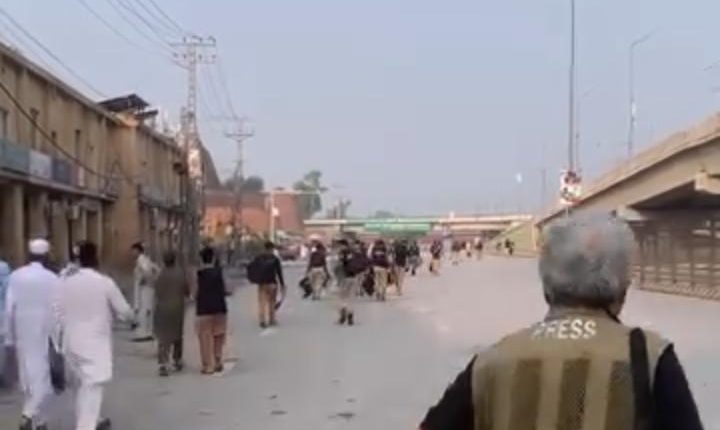
The proposed move comes amid reports of heightened security in Peshawar, including restrictions around the Red Zone, the reported deployment of additional security personnel and mobile network disruptions at certain locations. Reports of restrictions on some major highways have also raised concerns about the potential impact on public movement and commercial activities.
The federal cabinet’s position indicates that the centre considers the prevailing security challenges serious enough to warrant consideration of extraordinary constitutional measures. The move also places renewed focus on the provincial administration’s responsibility to maintain law and order, support counterterrorism operations and ensure effective governance.
However, the proposed emergency should not be confused with a formally implemented decision. Its constitutional and legal status will depend on the relevant procedures and any subsequent official announcement by the competent authorities.
The situation has heightened the need for effective coordination between federal and provincial institutions, particularly in security operations, intelligence sharing and the protection of public life and property. Any prolonged disruption could affect businesses, educational institutions, transport services and access to essential public facilities.
The federal government’s move reflects its stated concern that the existing provincial response is insufficient to address the security situation. The provincial government’s position and response to the cabinet’s allegations would also be relevant to a comprehensive assessment of the dispute.
At this critical juncture, the priority remains the restoration of peace, the protection of citizens and the continuity of essential services. Any extraordinary constitutional action must follow the Constitution and applicable legal procedures while ensuring that public safety and the rights of citizens remain protected.
